
Urban landscaping and environmental sustainability in city planning have received heightened attention globally, as green spaces contribute significantly to residents' quality of life, biodiversity, and climate regulation. Among the myriad tree species utilized in urban and suburban greening projects, the Terminalia catappa tree stands out as a resilient, multifunctional species. Alongside this, a diverse array of ornamental and shade trees continue to enhance urban aesthetics and ecology, including Lagerstroemia indica, Delonix regia, Hibiscus tiliaceus (and its Rubra variant), Pongamia pinnata, Albizia saman, Millingtonia hortensis, Ficus nitida, Peltophorum, Ginkgo biloba, Magnolia grandiflora, Photinia serrulata, Cinnamomum camphora, Prunus yedoensis, Trachycarpus fortunei, Tecoma stans, Wodyetia bifurcata, Sea grape plant, Ficus religiosa (the sacred fig tree), and Ficus racemosa.
### Terminalia catappa: A Versatile Urban Tree
Terminalia catappa, commonly known as the tropical almond or Indian almond tree, thrives in tropical and subtropical regions and has become a favored choice in urban landscaping. This deciduous tree can grow up to 35 meters in height and is notable for its broad, spreading canopy that provides ample shade—an invaluable asset in city parks, streets, and coastal areas. The tree’s large, leathery leaves exhibit a beautiful color transition from green to bright red or yellow during the dry season, adding seasonal visual interest to urban environments.
Environmental benefits of Terminalia catappa extend beyond aesthetics. Its extensive root system aids soil stabilization, making it useful in preventing coastal erosion. Moreover, its ability to tolerate saline soils and withstand strong winds renders it especially suitable for coastal urban greening projects. Ecologically, this tree supports urban biodiversity by providing habitats and food sources for birds and small mammals.
### Complementary Species for Urban Greening
Terminalia catappa is just one element of a sophisticated palette of tree species employed to create resilient and attractive urban green spaces. Each tree species offers unique advantages, enabling planners to design diverse landscapes that enhance ecological functions, aesthetics, and public wellbeing.
- **Lagerstroemia indica (Crape Myrtle)**: Renowned for its ornamental flowers in vibrant colors ranging from white to pink, red, and purple, this tree offers extended summer blooms and smooth bark for added seasonal interest.
- **Delonix regia (Flamboyant or Royal Poinciana)**: This striking tree produces an abundance of fiery red flowers and a broad canopy, providing excellent shade and visual statement in parks and boulevards.
- **Hibiscus tiliaceus and Hibiscus tiliaceus Rubra**: These species provide coastal shade and tolerate high salt and wind exposure, making them ideal for beachside promenades.
- **Pongamia pinnata (Indian Beech)**: Valued for nitrogen-fixing capabilities that improve soil fertility, Pongamia pinnata also provides shade and is used in biofuel plantations, linking urban forestry and sustainable energy goals.
- **Albizia saman (Rain Tree)**: Known for its wide canopy and aesthetic appeal, it’s widely used as a roadside shade tree, especially in tropical regions.
- **Millingtonia hortensis (Indian Cork Tree)**: With its fragrant white flowers and moderately fast growth, this tree is both functional and ornamental.
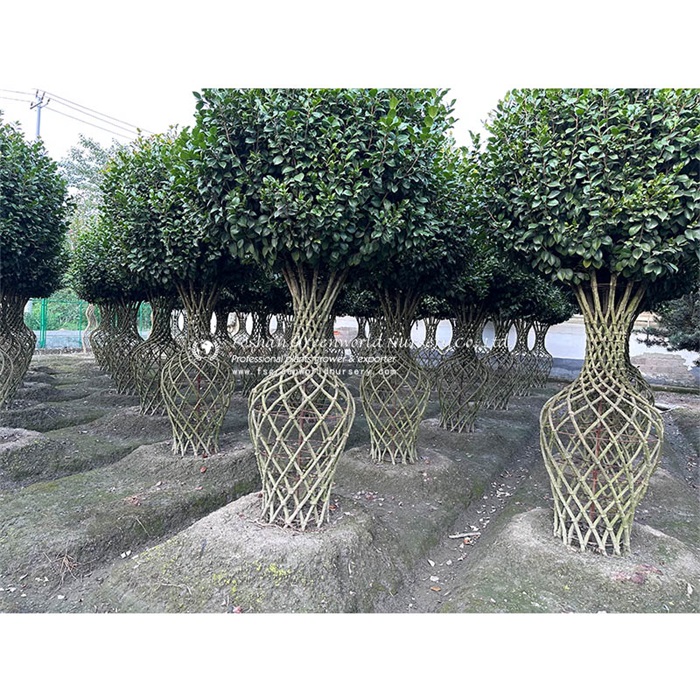
- **Ficus nitida (Indian Laurel Fig)**: An evergreen tree with dense foliage, often used in urban parks and streets for shade and as bonsai specimens.
- **Peltophorum**: Appreciated for its yellow flowers and robust structure, this tree is favored for roadside planting.
- **Ginkgo biloba**: The “living fossil” species is prized for its fan-shaped leaves that turn bright yellow in autumn and its exceptional tolerance to urban pollution.
- **Magnolia grandiflora**: Known for large, fragrant white flowers and glossy evergreen leaves, this tree adds elegance to green spaces.
- **Photinia serrulata**: Often used in hedges and borders, its bright red leaves provide color contrast in gardens.
- **Cinnamomum camphora (Camphor Tree)**: Offers dense shade and has strong aromatic properties, although it requires monitoring due to its invasive potential in some regions.
- **Prunus yedoensis (Yoshino Cherry)**: Famous for its picturesque spring blossoms, it enhances urban aesthetics and attracts visitors to parks.
- **Trachycarpus fortunei (Windmill Palm)**: Adds tropical flair and adapts well to urban environments.
- **Tecoma stans (Yellow Bells)**: A flowering shrub/tree that attracts pollinators and adds bright yellow color.
- **Wodyetia bifurcata (Foxtail Palm)**: Valued for its exotic look and resilience.
- **Sea Grape Plant**: Often planted near coastal areas, adding both ornamental value and stability to sandy soils.
- **Ficus religiosa (Sacred Fig Tree)** and **Ficus racemosa**: Both figs are culturally significant and provide dense shaded areas supporting urban wildlife.
### Integrating Tree Species for Sustainable Urban Landscapes
Urban forestry specialists advocate for the integration of diverse species suited to local climate, soil, and cultural contexts. The combination of trees like Terminalia catappa with flowering species such as Lagerstroemia indica and the sturdy shade of Albizia saman or Peltophorum can create layered canopies that optimize shade and biodiversity. Trees with nitrogen-fixing properties, such as Pongamia pinnata, contribute to soil health, while fragrant species like Magnolia grandiflora and Millingtonia hortensis improve sensory experiences for city dwellers.
Moreover, selection criteria now increasingly factor in climate resilience. Trees like Ginkgo biloba and Trachycarpus fortunei tolerate urban pollution and heat stress, traits critical under global warming scenarios. Coastal cities benefit immensely from salt-tolerant species like Terminalia catappa and Hibiscus tiliaceus, which help safeguard shorelines against erosion.
### Conclusion
As urban centers evolve, the role of trees like Terminalia catappa—in conjunction with a broad spectrum of ornamental and functional species—becomes central to developing sustainable, attractive, and healthy environments. Beyond their shade and beauty, these trees contribute ecological services, from carbon sequestration and air purification to supporting urban biodiversity. Their careful selection and integrated planting align with modern urban greening strategies, offering tangible benefits to communities and ecosystems alike.
Through ongoing research, community engagement, and investment in urban forestry, cities can enhance green infrastructure, making urban life richer and more resilient in the face of environmental challenges. The synergy among species such as Terminalia catappa and the diverse ornamental trees mentioned embodies the future of vibrant, sustainable urban landscapes.