
---
**Expanding Urban Greenery: The Role of Casuarina equisetifolia and Diverse Plant Species in Modern Landscaping**
As urban areas continue to grow and environments face increasing ecological challenges, the importance of integrating greenery into cityscapes has never been greater. Among a variety of plants promoting sustainable urban ecosystems, **Casuarina equisetifolia** stands out for its adaptability and environmental benefits. This coastal tree, alongside a rich assortment of plant species such as Lagerstroemia indica, Delonix regia, and Ficus nitida, plays a pivotal role in modern landscaping and ecological restoration projects.
### Casuarina equisetifolia: A Sturdy Ally for Environmental Balance
Casuarina equisetifolia, commonly known as the Australian pine or coast she-oak, is a hardy species native to coastal regions across Asia, Australia, and the Pacific Islands. Its slender, needle-like foliage and robust root system allow it to thrive in sandy soils and withstand harsh conditions such as salty winds and poor fertility. This tree has numerous practical applications in reforestation, coastal stabilization, and windbreak planting.
One of the key ecological roles of Casuarina equisetifolia is its ability to prevent soil erosion along coastlines. Its extensive root network binds soil, reducing runoff and protecting shorelines from degradation. Moreover, these trees contribute to improving air quality by sequestering carbon dioxide, making them valuable in urban environments grappling with pollution.
Beyond its environmental impact, Casuarina equisetifolia is recognized for its fast growth and minimal maintenance requirements, making it an attractive choice for urban planners and landscapers focusing on sustainability. Its evergreen foliage provides year-round greenery, enhancing the aesthetic and ecological value of parks, roadways, and residential complexes.
### Enhancing Biodiversity with a Variety of Ornamental and Native Trees
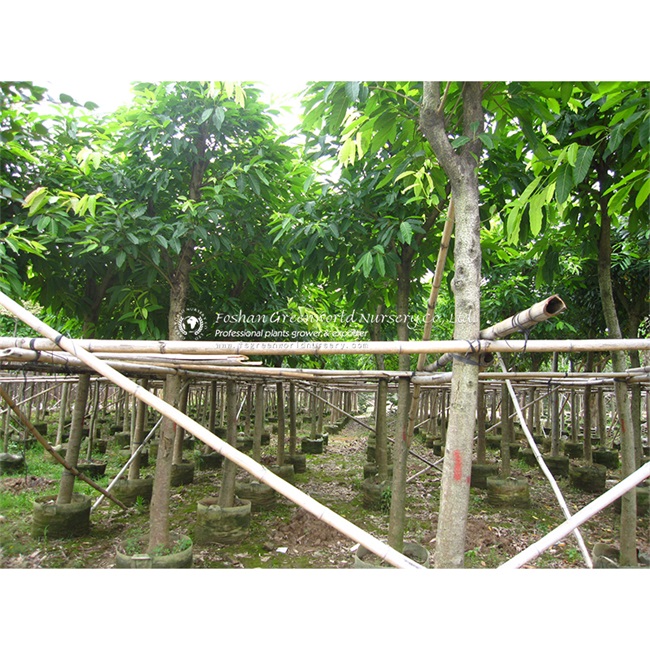
Complementing Casuarina equisetifolia in urban and suburban planting schemes is a diverse palette of species that blend beauty with ecological function. The company specializes in providing an extensive range of plants suitable for various climates and landscaping needs, including:
- **Lagerstroemia indica (Crape Myrtle):** Famous for its vibrant, long-lasting flowers and attractive bark, Lagerstroemia indica adds seasonal color and textural interest to gardens and streetscapes. Its drought tolerance and adaptability further enhance its landscape value.
- **Delonix regia (Royal Poinciana):** Renowned for flamboyant orange-red blossoms, this tree is an icon of tropical and subtropical landscapes. It offers ample shade and can serve as a focal point in parks and large gardens.
- **Hibiscus tiliaceus and Hibiscus tiliaceus rubra:** These shrubs and small trees are cherished for their large hibiscus-like flowers and adaptability to coastal environments, aligning well with Casuarina equisetifolia’s ecological niche.
- **Pongamia pinnata:** A nitrogen-fixing tree, Pongamia contributes to soil fertility and improves land degraded by poor nutrients. Its potential use in biofuel production also adds to its value.
- **Albizia saman (Rain Tree):** Known for its expansive canopy and shade-providing qualities, it supports local fauna by offering habitat and food.
- **Millingtonia hortensis:** This species produces fragrant white flowers, enhancing the sensory appeal of landscapes while its tall, pyramidal form suits avenue planting.
- **Ficus nitida and Ficus religiosa:** These figs are vital for urban biodiversity, attracting birds and support pollinator networks. The sacred fig, in particular, holds cultural significance in many regions.
- **Peltophorum and Ginkgo biloba:** Peltophorum with its bright yellow flowers adds seasonal interest, while the Ginkgo adds a touch of ancient botanical heritage and resilience in urban settings.
- **Magnolia grandiflora:** Its large, fragrant blooms and glossy leaves cater to textile aesthetics and biodiversity.
- **Photinia serrulata and Cinnamomum camphora:** These species offer evergreen foliage and aromatic leaves, respectively, contributing to enhanced air quality and year-round greenery.
- **Prunus yedoensis (Yoshino Cherry):** Celebrated for breathtaking springtime blooms, this tree drives cultural festivals and promotes community engagement through nature appreciation.
- **Trachycarpus fortunei (Windmill Palm) and Wodyetia bifurcata (Foxtail Palm):** These palms introduce exotic flair and manage microclimates by moderating heat and providing shade.
- **Sea Grape Plant:** Coastal tolerance and ornamental fruit make it a favorite in seaside landscaping.
- **Ficus racemosa:** Another fig species important for urban wildlife and ecosystem health.
- **Bonsai Sacred Fig Tree:** A miniature form of the sacred fig, this plant bridges traditional horticultural art with modern living spaces.
### Towards Sustainable Urban Landscaping and Reforestation
Urban forestry and landscaping enterprises are increasingly adopting a diversified approach to planting. Incorporating species like Casuarina equisetifolia, which supports soil stabilization and carbon sequestration, alongside ornamental and ecologically beneficial trees, offers a well-rounded strategy. This approach not only improves environmental quality but also enhances aesthetic appeal and community well-being.
The company’s broad selection of plants reflects a commitment to environmental resilience and cultural richness. By offering native, exotic, and multifunctional species, they support the creation of green spaces that are both beautiful and nachhaltig (sustainable).
As cities face the twin pressures of climate change and urbanization, integrating trees that contribute to ecosystem services such as pollution mitigation, habitat provision, and climate regulation becomes imperative.
### Conclusion
Casuarina equisetifolia exemplifies the kind of versatile, resilient species necessary for contemporary environmental challenges, particularly in coastal and urban contexts. When combined with a comprehensive palette of horticulturally and ecologically valuable plants such as Lagerstroemia indica, Delonix regia, and Ficus nitida, urban landscapes can transform into thriving green ecosystems.
This diversity not only beautifies cities but also strengthens their environmental backbone, promoting healthier, more sustainable urban living for generations to come.
---
If you require a tailored focus or additional details on specific topics like the company’s initiatives, planting techniques, or environmental impact, feel free to ask!